
Best Practices
Building Effective Referee Mentorship Programs
How structured mentorship can improve officiating quality and retain new referees.
Joey Fisher
How structured mentorship can improve officiating quality and retain new referees.
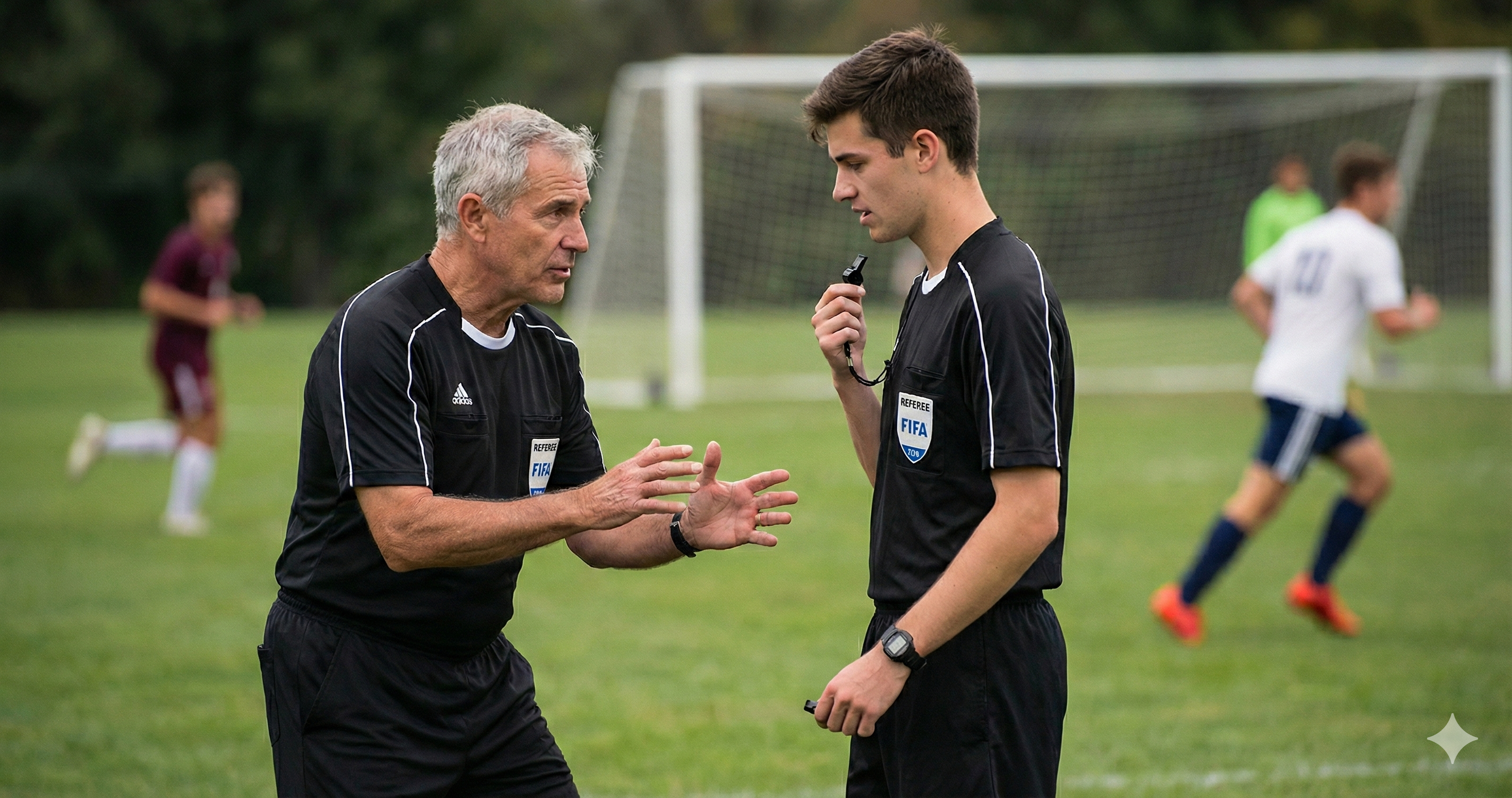
The shortage of referees in youth and amateur sports is both a recruitment and retention issue. Many associations bring in new officials through certification courses, but keeping them involved after their first season is a challenge. NASO data indicates that the majority of new officials quit within their first few years, often citing abuse from parents and coaches as a primary reason, along with lack of support and difficulty handling the social pressures of officiating.
One way to address this is to create a structured mentorship program. Pairing experienced officials with newcomers gives new referees the guidance, support, and confidence that classroom training alone cannot provide. Here are steps to build a mentorship program that helps new referees become skilled, committed members of your officiating group.
Start your mentorship program by setting clear goals. Decide what you want to achieve, such as lowering first-year referee turnover, helping new referees develop skills faster, improving how they manage games, and building a supportive culture among officials.
Write down these goals and share them with both mentors and mentees. When everyone knows the program's purpose, participation is more meaningful and results are easier to measure. Survey new referees to learn about their main challenges and concerns. Use this feedback to shape your mentorship program.
Set clear, measurable targets. For example, aim to reduce early-career turnover, or ensure every new referee completes at least 10 mentored games in their first season. These goals help you track how well the program works and make improvements based on real data.
Not all experienced referees are suited to be mentors. The best mentors have strong technical skills, patience, good communication, and a genuine interest in helping others grow. They should be respected in your group, act professionally, and set the example you want new referees to follow.
Create a formal mentor selection process. Invite experienced referees to apply, explaining the time commitment and responsibilities. Look for officials with at least 3-5 years of experience, strong performance ratings, and positive feedback from coordinators and peers. Consider interviews to assess their mentoring philosophy and commitment.
After choosing your mentors, make sure they get proper training. Being a good referee does not always mean someone will be a good mentor. Offer training on giving helpful feedback, listening well, handling conflicts, and building confidence in new referees without making them dependent. Dedicate adequate time for mentor training before the season starts.
The most effective mentorship programs combine multiple interaction formats. Pre-game meetings allow mentors to review positioning, signals, and key rules. On-field shadowing puts mentees in real game situations with their mentor nearby for support. Post-game debriefs offer opportunities for reflection and constructive feedback.
Set up a clear path for mentees to follow. At first, new referees can take on less important roles while their mentor leads. As they gain confidence, the mentee takes on more responsibility, and the mentor steps back to observe and support. This step-by-step approach helps new referees build skills without feeling overwhelmed.
Create a mentorship schedule that ensures regular contact. Aim for at least one mentored game per week during the first month, then gradually reduce frequency as mentees gain independence. However, maintain some mentor contact throughout the first season. Even new referees who seem experienced benefit from ongoing support.
Great mentorship programs stand out because of the quality of their feedback. Teach mentors to give clear, practical advice instead of general comments. For example, instead of saying, "Your positioning during that corner kick needs work," they could say, "On corner kicks, position yourself on the goal line at the near post so you can see both the ball and potential goal-line activity."
Encourage mentors to use the feedback sandwich: start with something positive, mention an area to improve, and end with another positive point. New referees need to know what they are doing well, not just what to fix. Celebrating small wins, like handling a coach well or being in the right spot during a key play, helps build their confidence and motivation.
Document mentorship interactions. Simple forms recording the date, game, topics discussed, and areas for continued development create valuable records of progress. This documentation helps coordinators track mentee development, identify referees who need additional support, and recognize when mentees are ready for more challenging assignments.
Mentorship programs are most effective when they help build a sense of community, not just one-on-one relationships. Hold group sessions where several mentor-mentee pairs can talk about common challenges, share stories, and learn together. These meetings help new referees feel less alone and show that everyone faces similar struggles.
Think about setting up a digital space, like a private forum, group chat, or online platform, where new referees can ask questions, share experiences, and connect with others between games. Many new referees may not want to call their mentor for small questions, but they are more likely to post in a group where they see others doing the same.
Celebrate milestones and achievements. Recognize when mentees complete their first solo games, handle their first major challenge successfully, or receive positive feedback from coaches or coordinators. Public recognition validates their progress and reinforces their place within the officiating community.
Track program outcomes diligently. Monitor retention rates, comparing mentored new referees against historical data or control groups. Collect feedback from both mentors and mentees through mid-season and end-season surveys. Ask specific questions about what works, what does not, and how the program could be improved.
Look at performance data for referees who have mentors. Are they getting better game ratings than those without mentors? Do they move up in certification faster? Are they more likely to accept assignments and show up on time? These numbers help you see the program's impact beyond just keeping referees longer.
Use these insights to refine your approach. You may discover that mentees want more group learning sessions, or that mentors need better tools for documenting their interactions. Some mentor-mentee pairings may work better than others, informing how you match participants in future seasons. The best programs evolve based on participant feedback and measurable results.
Building an effective mentorship program requires time, effort, and resources. You need to invest in mentor training, create documentation and tracking systems, and dedicate coordinator time to program management. The return on this investment is substantial: lower turnover, faster skill development, stronger officiating culture, and a pathway for creating tomorrow's mentor officials from today's mentees.
Keep in mind that today's mentee can become tomorrow's mentor. By building strong mentorship systems now, you are not only helping new referees today, but also creating a culture where supporting and developing newcomers becomes an expected, valued part of your officiating community's identity.

Learn what hockey coordinators need in a referee management system: early ice time scheduling, 2-ref vs 3-ref systems, arena travel, and certification tracking.
Discover how the right soccer referee assignment tool simplifies scheduling for rec and travel teams, handles age requirements, and streamlines tournaments.
Master basketball referee scheduling with proven strategies for crew assignments, game levels, travel optimization, and certification tracking.