
Basketball
Basketball Referee Scheduling: The Complete Guide for Athletic Directors
Master basketball referee scheduling with proven strategies for crew assignments, game levels, travel optimization, and certification tracking.
Joey Fisher
Master basketball referee scheduling with proven strategies for crew assignments, game levels, travel optimization, and certification tracking.
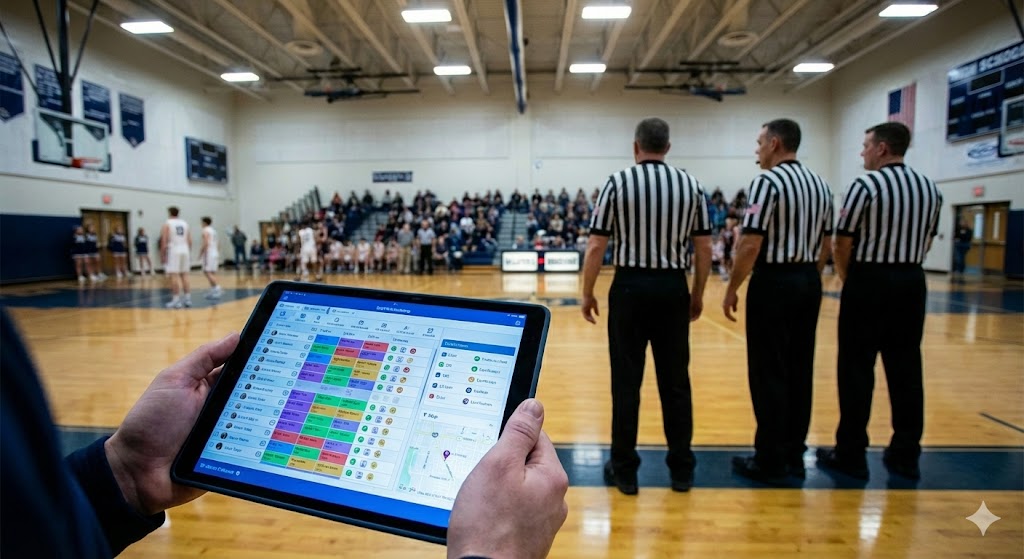
If you've ever scrambled to find a referee right before a game, you know that scheduling basketball officials is more than just matching names to dates. With JV and varsity games, certifications, crew coordination, and travel, athletic directors can find themselves spending a significant portion of their week managing officials.
This challenge is getting harder. The National Federation of State High School Associations reports that approximately 50,000 high school officials have left since the 2018-19 season, with basketball among the affected sports. Because of this shortage, coordinators need to be more strategic than ever in scheduling and keeping referees.
Here are some proven strategies to make basketball referee scheduling less stressful and more efficient.
Basketball scheduling stands out from other sports because most high schools have JV and varsity double-headers. This setup brings its own challenges:
Based on typical state association guidelines, JV games usually need two or three officials and start earlier in the evening, often between 4:30 and 6:00 PM. These games are often given to newer referees who are building their skills and certifications.
Varsity games also need two or three officials, but they require higher certification and more experience. These assignments usually go to veteran referees who have shown they can handle the top level of high school play.
Scheduling gets trickier when athletic directors want the same crew to work both JV and varsity games at one location. This approach reduces travel, keeps games consistent, and makes coordination easier. However, it also means you need referees who can commit to three or four hours at a time instead of just one game.
Manually assigning crews the traditional way often leads to uneven officiating and unhappy referees. Here are three strategies that work well:
The Anchor Official Method puts experienced referees in charge as crew leads for several games each week. You fill out their crews with newer officials, which creates opportunities for mentorship and keeps quality high. This method works especially well for conference games where consistency matters.
Geographic clustering means grouping officials by where they live and assigning them to nearby schools. For example, a referee living in the north part of your district would mostly work at northern schools. This reduces driving and makes referees more likely to accept assignments, especially when winter weather makes long drives risky.
Certification-based tiering sets clear roles: Level 1 officials mostly work JV games, Level 2 officials do both JV and varsity, and Level 3 officials handle varsity and playoff games. This system sets expectations and gives newer referees goals to work toward.
Many coordinators use a mix of these methods, grouping by location for regular games and picking the most experienced referees for rivalry games and tournaments.
Travel is a hidden cost that often drives referees away from the job. According to the 2023 NASO National Officiating Survey, many officials cite travel distance as a key concern when deciding whether to continue officiating or accept assignments.
Smart scheduling can make a big difference in reducing travel:
Calculate true travel time instead of just mileage. A 15-mile drive through rush hour to a 6:00 PM game might take longer than a 30-mile highway drive to a 7:30 PM game. Scheduling software that considers real drive times helps you make better assignments.
Set up travel pools where referees share how far they are willing to drive. Some are fine with a 45-minute drive for varsity games but want JV games closer, within 20 minutes. Respecting these preferences makes it much more likely they will accept assignments.
Bundle assignments by offering officials multiple games at the same venue or at nearby schools on the same evening. For example, asking, "Would you work the JV game at Lincoln at 5:00 PM and then the varsity game at Jefferson at 7:30 PM?" gives officials more income for less total travel time.
Distribute travel fairly by tracking each official's total mileage during the season. If your software shows Sarah has driven 400 miles while Mike has only driven 150, you can prioritize giving Sarah nearby assignments for the next few weeks.
Assigning a referee without the right certification to a varsity game can quickly damage your reputation. State athletic associations are strict about certification, and mistakes can lead to forfeited games, fines, or losing the right to host games.
Your tracking system needs to monitor several certification elements:
Certification Levels and requirements vary by state but typically include ratings like Provisional, Level 1, Level 2, and Level 3. Each level has specific game types they're authorized to officiate. Your scheduling system should automatically flag when you're trying to assign a Level 1 official to a varsity playoff game.
Track expiration dates for certifications, background checks, and required training. Set up alerts 60 days before anything expires so you can remind officials to renew, instead of discovering expired credentials on game day.
Some games, like playoffs, championships, or certain conferences, require specialized certifications and extra training or testing. These requirements aren't always obvious, so keeping detailed profiles for each official helps prevent embarrassing mistakes.
Many states now require things like annual rules meetings, concussion training, or bias training. Track who has completed these and send reminders to officials who still need to finish them.
Modern basketball referee scheduling software automates these compliance checks, helping you avoid ineligible assignments and providing audit trails when questions come up.
Creating your season schedule means balancing several competing priorities. Start with your fixed constraints:
First, enter all the game dates, times, and locations for both JV and varsity. Most schools play league games on Tuesdays and Fridays, with tournaments on holidays and weekends.
Next, pick out your most important games, such as rivalries, big crowds, senior nights, or playoff matchups. Reserve these dates and assign your most experienced crews to them first.
Then, work backward from those key dates and fill in the rest of the schedule with the right level of officials. This way, your best referees are saved for the most important games and not accidentally booked for regular matchups.
Add flexibility by finding referees who are willing to be emergency backups on certain dates. If someone cancels at the last minute, you will have a list of qualified officials who can step in.
Using basketball referee scheduling software instead of a spreadsheet is not just about convenience. Modern scheduling tools can save coordinators significant time by automating routine tasks like matching availability, checking certifications, and optimizing travel.
Look for systems that offer:
SyncedSport offers all these features and adds AI-powered tools that suggest the best crew assignments for your needs, whether you want to reduce travel, balance workloads, or keep crews consistent.
Even with the best basketball referee scheduling software, managing relationships is still crucial. Coordinators who keep the best officials do these things consistently:
They give out assignments well ahead of time, at least two weeks before regular season games and ideally four weeks before playoffs. They answer questions quickly and thank referees personally after big games, instead of just sending payment notifications.
They also stand up for their referees with coaches and athletic directors, handle concerns professionally, and support officials who make the right calls, even when those calls are tough. Referees who feel supported and respected are much more likely to stay with you year after year.
The shortage of referees is not going away, so coordinators need every tool to manage their pools efficiently and keep officials happy. Smart crew assignments, travel planning, and automated certification tracking are not just nice to have; they are essential for a successful basketball officiating program.
If you are spending more time struggling with spreadsheets or old software than connecting with your referees, it may be time to look into modern scheduling tools that can save you hours. Find out how SyncedSport's AI-powered platform can handle the details of basketball referee scheduling so you can focus on what matters most.

Learn what hockey coordinators need in a referee management system: early ice time scheduling, 2-ref vs 3-ref systems, arena travel, and certification tracking.
Discover how the right soccer referee assignment tool simplifies scheduling for rec and travel teams, handles age requirements, and streamlines tournaments.
Discover how artificial intelligence is transforming the way sports associations assign officials to games.